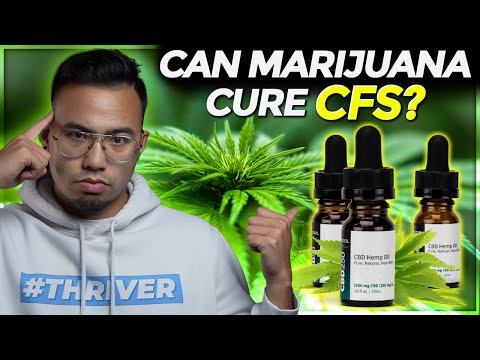
A Balanced, Educational Look
Cannabis comes up often with CFS, usually around sleep, pain, or anxiety. People want to know whether it helps, whether it hurts, and where it fits. This article is a balanced, educational overview meant to help you think it through and talk to your doctor.
A few things to be clear about. We're a coaching and education team, not doctors. Nothing here is a recommendation. We're not telling you to start using cannabis, THC, or CBD, and we're not telling you to stop. Those are personal and medical decisions that depend on your health, your situation, and the law where you live.
What we can offer is an even-handed picture. For some people, in some situations, these substances may take the edge off certain symptoms for a while. They can also affect sleep, anxiety, and the nervous system in ways worth understanding. Both sides are real, and the right call is individual. You can read about the condition itself on our page covering what CFS is.
THC and CBD Are Different
It helps to separate the main compounds, because they don't act the same way. THC is the part of cannabis that's intoxicating, the one that produces a high. CBD doesn't cause that high and is often used for its calming reputation. Many products contain a mix, in ratios that vary a lot.
This matters because someone's experience depends heavily on which compound, how much, and in what form. A high-THC product and a CBD-only product can feel completely different. Edibles, oils, and inhaled forms also act at different speeds and strengths. Lumping it all together as "cannabis" hides those big differences.
Products vary in quality and labeling too, especially where the market is less regulated. What's on the label isn't always what's in the bottle. So part of any honest discussion is knowing that "trying CBD" or "trying cannabis" covers a wide range of very different things, which is one more reason to involve a professional.
THC is the intoxicating compound in cannabis that produces a high. CBD does not cause a high and is often used for its calming reputation. Products mix them in different ratios and come in many forms, so effects vary widely from one product and person to the next.
Where Some People Find Relief
Some people with CFS say cannabis or CBD helps with specific symptoms. The most common reports are easier sleep onset, a calmer feeling in the moment, less pain, or a quieter mind during a hard stretch. For someone struggling to wind down, that short-term relief can feel meaningful.
It's worth holding these reports gently. They're personal experiences, responses differ widely, and what soothes one person may do little or even backfire for another. Easing a symptom in the moment is also different from changing the underlying pattern, the same way other symptom supports work on the output rather than the root.
So if someone finds that a doctor-guided option helps them rest or settle while they do the deeper recovery work, that's their conversation to have with a professional. The point here isn't to talk anyone into it. It's to acknowledge honestly that some people do report short-term relief, while keeping the full picture in view.
The Effects Worth Weighing
The other side deserves equal honesty. Cannabis, especially higher-THC use, can affect sleep quality even when it helps you fall asleep faster. Deep, restorative sleep can take a hit, which matters a lot when unrefreshing sleep is already part of CFS. Our guide on sleeping better with CFS covers why sleep quality is so central.
THC can also raise anxiety or a racing heart in some people, particularly at higher doses. For a nervous system that's already in a high-alert state, that's the opposite of what recovery is aiming for. Some people feel calmer, some feel more wired, and it's hard to predict which camp you'll land in ahead of time.
There's also tolerance and reliance to consider. Leaning on any substance to fall asleep or to feel okay can make it harder to build the body's own ability to settle. None of this is a verdict against cannabis. It's a reminder that the effects cut both ways, and the trade-offs are real and individual.
How It Touches the Nervous System
Recovery from CFS, in our experience, is about helping a nervous system stuck in survival mode learn that it's safe. Anything you bring in is worth viewing through that lens: does it support a calmer, more settled system over time, or does it work against that?
For some people, a calmer moment from CBD might lower the alarm a little in the short term. For others, THC's effect on anxiety, heart rate, and deep sleep can keep the system more wound up, especially with regular use. Because responses vary so much, the only way to know your own is careful, honest observation, ideally with professional guidance. Our overview of the nervous system in fight or flight explains the state we're working to calm.
The deeper recovery work doesn't depend on cannabis in either direction. The core is calming the alarm, brain retraining, steady pacing, and gradual expansion. Whether or not someone uses a doctor-guided symptom support along the way, that underlying work is what tends to move the needle. You can see how it unfolds in our stages of recovery.
Legality and Your Doctor
Two practical points close this out. First, legality. Laws around cannabis, THC, and CBD differ a lot from one place to another, and they change over time. What's legal in one region may not be in another, so check the rules where you live before anything else.
Second, and more important, this is a medical conversation. A doctor who knows your history can weigh possible benefits against the effects on your sleep, anxiety, heart, and any medications you take. They can also help you rule out other causes of your symptoms first. Cannabis can interact with medications, which is one more reason to keep a professional in the loop.
Marijuana, THC, and CBD may ease some symptoms short term for some people, and they can also affect sleep, anxiety, and the nervous system. This is an educational overview, not a recommendation in either direction. Check the law where you live, and make any decision with your doctor. The deeper recovery work, in our experience, is calming and retraining a nervous system that's stuck, not broken. You can read about that approach on our page on how recovery works.
TL;DR Summary
- This is a balanced, educational overview, not advice. We're not telling anyone to start or stop
- Some people report short-term relief for symptoms like sleep onset, pain, or anxiety, and responses vary widely
- Cannabis can also affect deep sleep quality, raise anxiety or heart rate in some people, and build reliance
- THC and CBD act differently, and products vary a lot in what they contain and how strong they are
- View anything you bring in through one lens: does it help a stuck nervous system settle over time, or not
- Legality differs by place and changes over time. Make any decision with your doctor, who knows your full picture