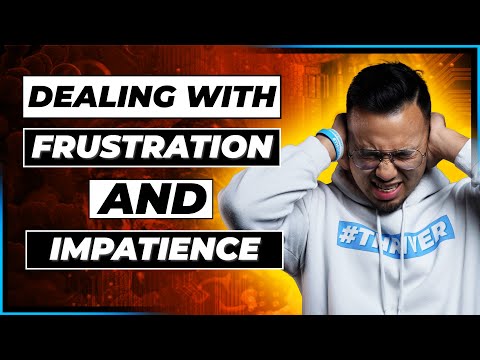
Frustration Is Normal
You've been doing the work. You're pacing, you're retraining, you're resting when you'd rather be living. And still, some days, the progress feels painfully slow. The frustration bubbles up: "Why is this taking so long? Why am I not better yet?"
First, let's say clearly that this is normal. Anyone putting real effort into recovery while living with hard symptoms is going to feel frustrated and impatient sometimes. It doesn't mean you're ungrateful, weak, or doing it wrong. It means you're human and you want your life back.
So the goal isn't to never feel frustrated. That's not realistic. The goal is to understand what frustration and impatience do to your nervous system, and to find a kinder, calmer way to carry them. That starts with seeing the hidden cost of the constant push.
What Impatience Costs You
Impatience feels like motivation, like it's pushing you toward recovery. But for a sensitized nervous system, the constant internal pressure works more like another stressor. The drumbeat of "hurry up, this is taking too long, why aren't you better" keeps your system braced and on alert.
This connects to the idea of a stress bucket. Every demand on your body adds water: poor sleep, exertion, worry. The pressure of impatience pours water in too. So while you're frustrated that recovery is slow, the frustration itself is adding load to the very system you're trying to calm. It can quietly stretch out the timeline you're so eager to shorten.
None of this means your frustration is your fault, or that you're sabotaging yourself. It simply means the push you feel isn't helping the way it seems to. Recognizing that impatience is a stressor, not a tool, is the first step to setting some of it down. The bigger picture of load on the system is covered in our piece on allostatic load.
The constant internal push for faster progress feels like motivation, but a sensitized nervous system reads it as pressure. That pressure adds to the system's stress load and keeps it on alert, which can work against the very recovery you're rushing toward. Easing the push lightens the load.
You Can't Force the Timeline
A hard but freeing truth sits at the center of this: you can't force a nervous system to calm down faster by wanting it more. Healing has its own pace. You can create the right conditions, steady pacing, brain retraining, rest, safety, but you can't command the timeline the way you might push through a project at work.
In fact, pushing for speed often backfires, because the pushing is itself a stress signal. A nervous system calms when it feels safe and unpressured, and impatience is the opposite of unpressured. So the very urgency you feel can hold things back. It's like yanking on a plant to make it grow faster.
Letting go of the timeline doesn't mean letting go of the work. You keep doing the steady habits that help. You just release the white-knuckle grip on when results have to arrive. That release is itself calming, and a calmer system tends to move forward better than a rushed one. Our piece on the stages of recovery shows how the arc unfolds over time.
Self-Compassion as a Tool
When frustration hits, most people turn on themselves. "I should be further along. Other people recover faster. What's wrong with me?" That harsh self-talk is another stressor stacked on top of the frustration. Your nervous system hears the criticism and stays braced.
Self-compassion is the alternative, and it's a real recovery tool, not a soft extra. Speaking to yourself the way you'd speak to a friend doing this hard work sends your nervous system a safety signal. "This is really hard, and I'm doing my best" calms the system far more than "I'm failing" ever could.
Try noticing the harsh voice when it shows up and gently swapping it for a kinder one. You don't have to believe the kind words fully at first. Even practicing them softens the internal pressure. Over time, self-compassion becomes a steady source of the safety your nervous system needs to keep settling.
Acceptance Is Not Giving Up
A lot of people hear acceptance and think it means giving up, settling for being sick, abandoning hope. It doesn't. Acceptance means stopping the exhausting fight against where you are right now, so you can put that energy toward moving forward instead.
When you're constantly fighting reality, refusing to accept today's symptoms, raging that you're not better, you spend a huge amount of energy on resistance. That resistance is a stressor too. Accepting the present moment, "this is where I am today, and that's okay for now," calms the system and frees up energy for the actual work of recovery.
Acceptance and hope can live together. You can fully accept where you are today while still believing in and working toward where you're going. In fact, that combination is powerful: a calm acceptance of the present plus a steady commitment to the path. It takes the war out of recovery and leaves the work.
Working With Frustration in the Moment
When frustration flares, you don't have to push it away or pretend it isn't there. Start by simply naming it: "I'm feeling really frustrated right now, and that makes sense." Naming an emotion takes some of its charge out and keeps it from running the show.
Then, instead of letting the frustration spike your whole system, do something to calm your body. Slow breathing, a short rest, or a gentle change of scene can settle the surge. You're not ignoring the feeling, you're keeping it from adding more stress on top of itself.
It also helps to widen your view past today. Frustration usually lives in the short term, in this slow week. Looking at the trend over months reminds you that the picture is bigger than the moment. Our piece on why short-term thinking slows recovery goes deeper on that.
Be patient and kind with yourself as you practice all of this. You're carrying a lot, and feeling frustrated along the way is part of being human in a hard situation. We're a coaching and education team, not doctors or therapists, so if frustration tips into deeper or lasting low mood, please reach out to a qualified professional for support.
TL;DR Summary
- Frustration and impatience in recovery are normal and don't mean you're doing anything wrong
- Impatience feels like motivation, but a sensitized nervous system reads the constant push as stress
- You can't force a nervous system to calm faster. Pressure tends to work against healing
- Self-compassion is a real tool. Kind self-talk sends the safety signal your system needs
- Acceptance is not giving up. It frees up energy that fighting reality drains, and it pairs with hope
- In the moment, name the feeling, calm your body, and widen your view past today